
Table of Contents
Maintaining a healthy work life balance has become more challenging than ever. With remote work, smartphones, flexible schedules, and increasing workloads, many people struggle to separate their professional responsibilities from their personal lives.
If you’ve ever answered emails during dinner, skipped family time because of work, or felt exhausted after a long week, you’re not alone. Finding a realistic example of work life balance can feel impossible, but it is highly achievable.
This guide explains what work life balance really means, provides a practical example of work life balance for various lifestyles, and shares realistic strategies that anyone in the United States can use to improve their daily routine.
Whether you’re a full-time employee, freelancer, business owner, or remote worker, you’ll learn how to build a healthier relationship between your career and personal life.
What Is Work Life Balance?
Work life balance refers to maintaining a healthy equilibrium between your professional responsibilities and your personal life.
It doesn’t mean giving equal hours to work and leisure every day. Instead, it means allocating your time and energy in a way that allows you to:
- Perform well at work
- Maintain good physical and mental health
- Spend quality time with family and friends
- Enjoy hobbies and relaxation
- Reduce long-term stress and burnout
Featured Snippet Answer
Work life balance is the ability to manage work responsibilities while making enough time for personal relationships, health, hobbies, and rest without consistently sacrificing one for the other. Every good example of work life balance involves prioritizing well-being alongside productivity.
Why Work Life Balance Matters
A healthy balance benefits both employees and employers.
Benefits for Employees
- Lower stress levels
- Better mental health
- Improved physical health
- Increased job satisfaction
- More quality family time
- Better recovery, allowing you to enjoy a peaceful good night’s sleep
- Higher overall happiness
Benefits for Employers
- Higher productivity
- Better employee engagement
- Reduced absenteeism
- Lower turnover
- Improved teamwork
- Stronger workplace culture
According to workplace research by Gallup, organizations that support employee well-being and set realistic performance goals often experience better retention and higher job satisfaction than companies with consistently demanding work environments.
15 Real-Life Examples of Work Life Balance
Below are realistic situations that demonstrate healthy boundaries. Every scenario serves as an excellent example of work life balance in action.
1. Logging Off at Your Scheduled Time
Sarah works from 8:30 AM to 5:00 PM. When her workday ends, she closes her laptop and avoids checking work emails until the next morning. Instead, she spends her evening cooking dinner and exercising.
- Why it works: It prevents overtime from becoming a daily habit, creates clear work boundaries, and supports mental recovery.
2. Taking Lunch Away from Your Desk
Instead of eating while answering emails, David takes a full 30-minute lunch break outside the office. He returns feeling refreshed and more productive.
- Why it works: Regular breaks improve focus and reduce mental fatigue.
3. Using Vacation Days
Many Americans leave paid vacation unused. Emily schedules one vacation every six months to disconnect completely from work. After returning, she feels more motivated and creative.
4. Turning Off Work Notifications After Hours
Michael disables Slack and email notifications after 6 PM. Unless there’s an emergency, work can wait until tomorrow. This simple habit reduces anxiety and improves sleep.
5. Making Time for Exercise
Jennifer starts each morning with a 30-minute walk before work. Whether it’s a neighborhood jog or using a treadmill to reduce belly fat, regular exercise helps her manage stress, improve concentration, and maintain energy throughout the day.
6. Having Family Dinner Every Night
Despite a busy schedule, one family commits to eating together every evening without phones.
- The result: Better communication, stronger relationships, and reduced stress.
7. Working Flexible Hours
Some U.S. companies allow flexible schedules. Instead of working a rigid 9–5, James works:
- 7 AM–11 AM: Work
- 11 AM–1 PM: Personal errands
- 1 PM–5 PM: Work
This schedule is a perfect example of work life balance for those who need to attend medical appointments or manage family responsibilities.
8. Saying No to Extra Work
Lisa already has a full workload. Instead of accepting another project she can’t realistically complete, she discusses priorities with her manager. Setting boundaries prevents burnout.
9. Scheduling Personal Time Like Meetings
Kevin adds gym sessions, reading time, family time, and doctor appointments directly to his calendar. Because they’re scheduled, they’re less likely to be skipped.
10. Working Remotely with Boundaries
Remote work can blur personal and professional life. Amanda has a dedicated home office, fixed work hours, and a daily shutdown routine. She leaves her workspace after work instead of continuing to check emails.
11. Spending Weekends Offline
Instead of catching up on work every Saturday, Brian spends weekends hiking and visiting family. By Monday, he returns with more energy and focus.
12. Delegating Responsibilities
Managers don’t have to do everything themselves. Delegating appropriate tasks—and empowering your team through resources like free online leadership courses—helps develop employees, reduces your workload, and improves team performance.
13. Taking Mental Health Days
Sometimes rest is more productive than forcing yourself to work when emotionally exhausted. Many top organizations now officially recognize mental health as a critical component of overall employee well-being.
14. Limiting Overtime
Working 12-hour days occasionally may be necessary, but doing it every week isn’t sustainable. Healthy employees recognize when overtime becomes the exception instead of the rule. This mindset is a strong example of work life balance.
15. Protecting Personal Hobbies
Whether it’s painting, gardening, photography, or learning guitar, hobbies help reduce stress and improve creativity. A fulfilling life includes interests beyond work.
Signs Your Work Life Balance Needs Improvement

You may have a poor work life balance if you:
- Constantly work late
- Skip meals or rarely take vacations
- Feel guilty when resting
- Experience frequent stress or trouble sleeping
- Miss family events
- Think about work all weekend
- Feel emotionally exhausted
Recognizing these warning signs early can help you prevent job burnout, a syndrome directly linked to chronic, unmanaged workplace stress.
Practical Ways to Improve Work Life Balance
Improving balance doesn’t require drastic lifestyle changes. Small, consistent habits often have the biggest impact.
Set Clear Working Hours
Choose a realistic start and finish time. Avoid extending your workday unless absolutely necessary.
Learn to Prioritize
Not every task is equally important. Consider using methods like the Eisenhower Matrix, time blocking, or daily priority lists. Focus on high-impact work first.
Reduce Digital Distractions
Constant notifications interrupt concentration. Try turning off unnecessary alerts, checking email at scheduled times, and using “Do Not Disturb” during focused work.
Take Regular Breaks
Working continuously reduces productivity. A simple approach is to work for 50–60 minutes, then take a 5–10 minute break. Even short breaks can refresh your focus.
Communicate Boundaries
If your workload becomes unmanageable, discuss expectations with your supervisor. Honest communication often leads to better solutions than silently working excessive hours.
Make Time for Health
Healthy routines support long-term performance. Prioritize healthy sleep hygiene, regular exercise, nutritious meals, and hydration. Your health directly affects your productivity.
Common Work Life Balance Mistakes
Many people unintentionally create unhealthy habits. Avoid these common mistakes by replacing them with healthier alternatives:
| Mistake | Better Alternative |
| Checking emails before bed | Read a book or relax instead |
| Skipping vacation | Schedule annual leave in advance |
| Saying yes to everything | Prioritize your core commitments |
| Working through lunch | Take a proper break away from your desk |
| Never exercising | Start with 20–30 minutes daily |
| Bringing work into family time | Set clear, device-free hours |
Work Life Balance Tips for Different Professionals
- Office Employees: Leave work at the office whenever possible. Use your lunch break to recharge, and avoid unnecessary overtime.
- Remote Workers: Create a dedicated workspace. Dress for work to establish a routine, and end each day with a strict shutdown ritual.
- Freelancers: Set client boundaries. Define your working hours, schedule real days off, and avoid the trap of accepting every single project.
- Business Owners: Entrepreneurs often work long hours, but you can still embody a healthy example of work life balance. Delegate tasks, automate repetitive work, focus on high-value activities, and deliberately schedule personal time.
Work Life Balance in the United States
Many U.S. employers have expanded flexible work arrangements in recent years, including hybrid schedules, remote work, wellness initiatives, and employee assistance programs. However, workplace expectations vary widely by industry and company.
Employees can often improve their balance by understanding their company policies related to paid time off (PTO), flexible scheduling, parental leave, and mental health resources. Taking advantage of these benefits can support long-term well-being without compromising career growth.
Quick Daily Work Life Balance Checklist
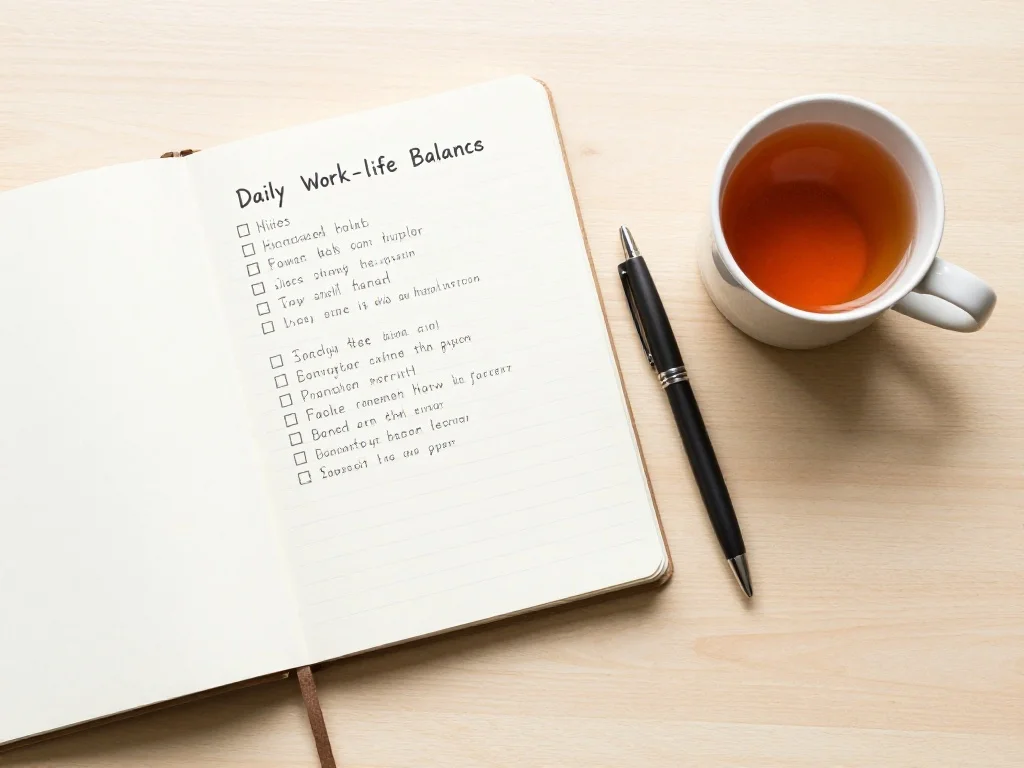
Use this quick checklist each day. If you check most of these boxes consistently, you’re moving toward a healthier balance:
- [ ] Finished work on time
- [ ] Took a lunch break
- [ ] Drank enough water
- [ ] Exercised or walked
- [ ] Spent time with family or friends
- [ ] Limited work after hours
- [ ] Slept at least 7–8 hours
Frequently Asked Questions (FAQs)
What is the best example of work life balance?
A great example of work life balance is completing your work during office hours, avoiding work emails after finishing for the day, exercising regularly, and spending uninterrupted time with family or personal hobbies.
Why is work life balance important?
Work life balance helps reduce stress, improves mental and physical health, increases productivity, strengthens relationships, and lowers the risk of burnout.
How can I improve my work life balance?
Start by setting work boundaries, prioritizing important tasks, taking regular breaks, exercising, using vacation time, and limiting work outside scheduled hours.
Does working from home improve work life balance?
It can, but only if you establish clear work hours, create a dedicated workspace, and avoid letting work extend into personal time.
What are common signs of poor work life balance?
Common signs include constant fatigue, working long hours, skipping breaks, poor sleep, stress, lack of personal time, and difficulty disconnecting from work.
Conclusion
Achieving work life balance isn’t about creating a perfect 50/50 split between work and personal life. It’s about making intentional choices that support your health, relationships, and career over the long term.
Every example of work life balance in this guide shows that balance often comes from small, consistent habits—setting clear work hours, taking regular breaks, using vacation time, exercising, and protecting time for family and hobbies. These practical changes can reduce stress, improve productivity, and help you enjoy both your professional and personal life.
Start by choosing one or two strategies that fit your routine, track your progress for a few weeks, and adjust as needed. Over time, these simple actions can lead to a healthier, more sustainable way of working and living.