
Finding the best health insurance in UAE requires looking beyond the lowest annual premium. Cheaper plans often come with smaller hospital networks, higher co-payments, lower annual limits, or heavy exclusions.
Your policy needs to fit your age, family size, location, medical needs, preferred hospitals, and budget. While maintaining wellness through a healthy morning routine guide supports your daily wellbeing, having proper medical coverage protects you against unexpected medical expenses. A Dubai resident wanting basic employee coverage has completely different requirements than a family looking for maternity and dental coverage.
The UAE enforces mandatory health insurance rules that change based on your emirate, visa, and job status. Since 1 January 2025, the federal Basic Health Insurance Scheme requires coverage for private-sector workers and domestic staff across the northern emirates.
Inspect policies closely before buying, understand how family coverage differs from individual plans, check visit visa insurance rules, and compare total costs instead of focusing only on price tags.

Table of Contents
What is the best health insurance in UAE?
Selecting the best health insurance in UAE means finding a plan that gives you solid medical coverage, an accessible hospital network, manageable out-of-pocket costs, and terms that fit your personal budget. No single policy works for every resident.
Before choosing a plan, consider:
- Annual coverage limit
- Hospital and clinic network
- Inpatient and outpatient treatment
- Emergency treatment
- Prescription medicines
- Maternity coverage
- Dental and optical benefits
- Pre-existing medical conditions
- Co-payment and deductible
- Waiting periods
- Geographic coverage
- Direct billing availability
- Claim procedures
- Policy exclusions
- Premium and renewal conditions
The UAE market sells basic, enhanced, and comprehensive policies. In Dubai, the Essential Benefits Plan (EBP) sets minimum coverage rules, while enhanced plans add wider networks and lower cost-sharing.
UAE health insurance: What you need to know in 2026
Your insurance requirements depend directly on where you live, your visa, and your job status.
Health insurance in Dubai
Dubai operates under a mandatory health insurance framework regulated by the Dubai Health Authority (DHA). The DHA sets the Essential Benefits Plan as the absolute baseline.
Employers have to buy insurance for their staff, but sponsors often buy separate coverage for dependants if the employer leaves them out. That distinction hits families hard. So if your company doesn’t cover your spouse or kids, you’ll need to buy individual policies for them yourself.
Dubai also relies heavily on provider networks. Your insurance card lists the exact hospitals, clinics, and doctors you’re allowed to visit.
Health insurance in Abu Dhabi
Abu Dhabi runs its own system. The Department of Health Abu Dhabi (DoH) mandates coverage for non-UAE nationals on Abu Dhabi work or residence visas, along with specific visitor categories. Employers and sponsors hold full legal responsibility for insuring eligible staff and dependants.
The emirate also has specific flexible options. The Department of Health’s flexible health policy sets annual treatment coverage at AED 150,000, with 100% emergency coverage, a 20% outpatient co-payment, and 30% for medicines.
Health insurance in the Northern Emirates
The federal Basic Health Insurance Scheme covers private-sector employees and domestic workers in Sharjah, Ajman, Fujairah, Ras Al Khaimah, and Umm Al Quwain. According to guidelines on the official UAE health portal, MOHRE requires employers to buy this plan whenever they issue or renew residence visas.
The Workers Health Insurance platform lists basic plans starting at AED 320 per person annually for workers and dependants aged 0 to 64, before VAT and fees. But premiums shift based on your category, so don’t expect every UAE plan to cost this little.
1. Compare the hospital and clinic network first
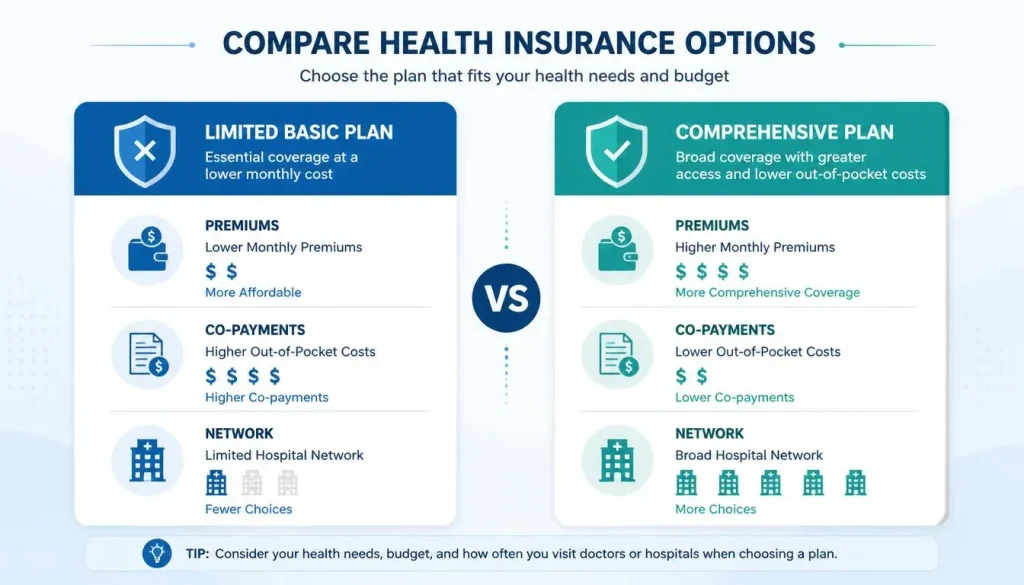
Finding the best health insurance in UAE for your routine healthcare relies heavily on network convenience. Most people overlook the medical network when buying health insurance. An affordable policy looks great on paper until you realize your local clinic won’t take it.
Check these points before purchasing:
- Is your preferred hospital included?
- Are nearby clinics covered?
- Can you use the policy outside your home emirate?
- Are specialist consultations covered?
- Is direct billing available?
- Are pharmacies included?
- Does the network include hospitals you’d realistically visit?
If you live in Dubai, you’ll want clinics near your home or office rather than a slightly cheaper plan that forces you to drive across town. Under regulatory standards established by the Central Bank of the UAE (CBUAE), insurance brokers must clearly explain coverage, exclusions, geographical limits, and key policy terms before you buy.
Why network size matters
Imagine two policies:
| Feature | Policy A | Policy B |
| Annual premium | Lower | Higher |
| Hospital network | Limited | Wider |
| Outpatient cover | Basic | Broader |
| Co-payment | Higher | Lower |
| Dental | Not included | Included |
| Specialist access | Restricted | Wider |
Policy A looks cheaper up front, but Policy B fits better if you visit specialists often.
Tip: Always ask which hospitals and clinics you can actually use before committing to a plan.
2. Look beyond the insurance premium
When searching for the best health insurance in UAE, remember that your annual premium is just one piece of the bill. Managing healthcare costs effectively is an essential part of personal financial planning in the Emirates, whether you are building passive income ideas in Dubai or managing a monthly budget.
Your actual healthcare costs often include:
- Deductibles
- Co-payments
- Coinsurance
- Non-covered medicines
- Excluded treatments
- Out-of-network expenses
- Waiting-period expenses
- Treatment costs above policy limits
What is a co-payment?
A co-payment is the share of a medical bill you pay out of pocket. For instance, if your policy sets a 20% co-payment on an AED 200 doctor visit, you’ll pay AED 40 at the counter.
What is a deductible?
A deductible is the fixed amount you pay before your insurer starts covering eligible bills.
Cheap plans usually stack on higher cost-sharing fees, whereas higher-premium plans cover more when you actually walk into a clinic. Balancing premium costs against out-of-pocket expenses fits into a broader roadmap to financial freedom, ensuring medical emergencies do not derail your savings.
A simple comparison
Suppose Plan A costs AED 1,200 annually and Plan B costs AED 1,700 annually. At first glance, Plan A looks AED 500 cheaper. But if Plan A forces higher co-payments, covers fewer hospitals, and excludes key treatments, that price gap disappears once you visit a doctor.
Ask yourself what the policy will cost you when you actually need medical treatment.
3. Check pre-existing conditions and exclusions carefully
Pay close attention to pre-existing conditions and exclusions. A pre-existing condition means any health issue you had before buying the policy, and insurers treat them very differently. Insurers won’t automatically cover existing conditions.
Check these items before buying:
- Pre-existing condition rules
- Waiting periods
- Chronic disease coverage
- Medication limits
- Diagnostic test coverage
- Specialist consultation terms
- Hospitalization rules
- Surgical coverage
- Policy exclusions
- Annual treatment limits
Always disclose your full medical history on your application. CBUAE regulations require brokers to explain why accurate disclosure matters and how hiding details can ruin your claims.
Don’t choose a policy based only on the benefits page
Exclusions matter just as much as benefits. A policy might market outpatient visits and medicines, but individual treatments can still carry:
- Sub-limits
- Waiting periods
- Eligibility requirements
- Provider restrictions
- Outright exclusions
Read the full policy wording directly instead of trusting a summary brochure.
4. Family health insurance: What should families check?

Securing the best health insurance in UAE for families requires looking at each member’s specific medical requirements rather than just bundling everyone together. Family health insurance protects your spouse and children when your employer leaves dependants off your company plan.
Check each family member’s needs
| Family Member | Important Considerations |
| Children | Paediatric care, vaccinations if covered, emergency care |
| Spouse | Outpatient, specialist, and maternity benefits where applicable |
| Parents | Age limits, medical underwriting, and chronic conditions |
| Adults | Hospitalization, medicines, and specialist treatment |
| Elderly members | Higher medical needs and policy restrictions |
Age changes your eligibility and pricing fast. Older relatives face strict underwriting rules. For example, the Workers Health Insurance platform mandates full medical forms and individual underwriting for parents aged 64 and older.
Maternity coverage
If you need maternity care, inspect the policy details before paying. Look for these specifics:
- Maternity waiting periods
- Antenatal consultation limits
- Hospital delivery coverage
- Normal vs. Caesarean delivery terms
- Newborn coverage duration
- Pregnancy-related exclusions
- Maternity-specific coverage caps
Family policies don’t automatically include maternity coverage.
5. Visit visa insurance UAE: What visitors should check
Visit visa insurance in the UAE works differently than resident health coverage. The Federal Authority for Identity, Citizenship, Customs & Port Security (ICP) requires health insurance for tourist visas and entry permits.
Certain visas carry strict rules. For instance, ICP rules for the 5-year multiple-entry tourist visa require a UAE-issued policy lasting at least 180 days. Whether you are hosting family members or exploring elite luxury travel destinations across the Emirates, selecting the best health insurance in UAE for visitors ensures full legal compliance and coverage for unexpected medical emergencies.
Check these items before buying visitor coverage:
- Validity period
- UAE-wide network coverage
- Emergency treatment rules
- Accident coverage limits
- Hospitalization terms
- Outpatient access
- Pre-existing condition exclusions
- COVID-19 coverage terms
- Visa-specific compliance
- Claims process
- Verification that the policy is accepted by immigration
Avoid buying the cheapest policy you find online. Your insurance must pass immigration standards and cover real emergencies while you visit.
6. Understand basic vs. enhanced health insurance
Choosing the best health insurance in UAE often comes down to deciding between basic and enhanced plans to match your healthcare requirements and career structure.
Basic health insurance
Basic health insurance meets legal minimums while keeping premiums low. A basic plan fits if you:
- Need baseline medical protection
- Operate on a tight budget
- Rarely visit doctors
- Stick to local network clinics
- Already get partial benefits through work
For self-employed professionals and freelancers investing in work-from-home essentials, purchasing individual coverage requires balancing budget needs with daily network access.
Enhanced health insurance
Enhanced health insurance offers:
- Wider hospital networks
- Higher annual limits
- Lower co-payments
- Broader geographical coverage
- Dental care
- Optical benefits
- Maternity care
- Expanded specialist access
Dubai recognizes enhanced policies that exceed the Essential Benefits Plan by adding wider networks and lower coinsurance. Buy what you actually use. If you rarely see a doctor, paying for a premium tier wastes money, but frequent clinic visits justify the higher cost.
7. A practical checklist for choosing health insurance in UAE
Run through this checklist before buying or renewing your plan:
Coverage checklist:
- [ ] Annual coverage limit checked
- [ ] Hospital network checked
- [ ] Clinic network checked
- [ ] Emergency treatment included
- [ ] Inpatient treatment checked
- [ ] Outpatient treatment checked
- [ ] Pharmacy and medicine coverage checked
- [ ] Specialist consultations checked
- [ ] Maternity requirements checked
- [ ] Dental and optical benefits checked
- [ ] Pre-existing condition rules understood
- [ ] Waiting periods checked
- [ ] Exclusions read
- [ ] Co-payment percentage understood
- [ ] Deductible amount understood
- [ ] Geographic coverage checked
- [ ] Direct billing availability checked
- [ ] Claim procedure understood
- [ ] Renewal terms reviewed
Questions to ask before paying:
- Which hospitals near my house are included?
- Which clinics offer direct billing without full upfront payment?
- What percentage do I pay for specialist visits?
- Are my prescription drugs covered?
- Are my pre-existing conditions covered right away?
- Is there a waiting period?
- What is my total annual coverage limit?
- Does the policy cap specific treatments?
- What happens if I go to an out-of-network hospital?
- What are the exact exclusions?
If a broker stumbles on these questions, request the full policy wording and benefit schedule before handing over money.
Common mistakes when buying health insurance in UAE
- Choosing only by price: Low premiums often hide high co-payments, tiny hospital networks, and heavy exclusions.
- Ignoring the hospital network: A cheap plan uselessly sits in your wallet if your local clinic refuses it.
- Assuming family members are automatically covered: Company insurance doesn’t automatically extend to your spouse and kids. Dubai guidelines encourage employers to cover dependants, but sponsors hold ultimate legal responsibility.
- Skipping the exclusions list: Read the exclusions before buying so you don’t face surprises during a medical emergency.
- Hiding medical history: Disclose every pre-existing condition. Incomplete applications give insurers valid grounds to deny claims later.
- Forgetting renewal dates: Put your policy expiry date on your calendar and start shopping early.
How to compare health insurance plans in UAE
Use a straightforward comparison table to weigh your options:
| Factor | What to Check |
| Premium | Total annual cost |
| Network | Hospitals and clinics available |
| Annual limit | Maximum eligible coverage |
| Outpatient | Doctor consultations and tests |
| Inpatient | Hospitalization and surgery |
| Emergency | Emergency treatment terms |
| Medicines | Coverage percentage and limits |
| Co-payment | Your share of treatment costs |
| Deductible | Amount paid before certain coverage |
| Maternity | Waiting period and limits |
| Dental | Included or optional |
| Optical | Included or optional |
| Pre-existing conditions | Coverage and restrictions |
| Geography | UAE-only or international |
| Claims | Direct billing and reimbursement process |
| Renewal | Terms and possible changes |
CBUAE conduct rules require insurers to clearly state coverage, exclusions, premiums, duration, and cancellation terms.
Frequently asked questions about health insurance in UAE
1. What is the best health insurance in UAE?
No single policy fits everyone. Compare hospital networks, coverage caps, co-payments, exclusions, pre-existing condition rules, and premiums before picking a plan.
2. Is health insurance mandatory in the UAE?
Yes, depending on your emirate and visa. Dubai mandates coverage for all residents, while federal rules enforce the Basic Health Insurance Scheme for private-sector staff and domestic workers in the northern emirates.
3. Is family health insurance available in the UAE?
Yes. Residents can buy family plans, though benefits, age caps, premiums, and exclusions vary between providers.
4. Do UAE visit visa holders need health insurance?
Yes. ICP requires valid health insurance for tourist visas and entry permits, though specific policy rules depend on your visa type.
5. How do I choose the best health insurance in UAE for my budget?
Base your choice on your actual medical habits and budget. Compare networks, co-payments, annual caps, and exclusions directly rather than assuming expensive plans are better.
Final thoughts
Selecting the best health insurance in UAE starts with understanding your actual healthcare habits instead of hunting for the cheapest plan available.
If you are buying for yourself, focus on hospital access, outpatient care, and medication coverage. If you are shopping for a family, prioritize maternity, child health, and dependant terms. If you are visiting, pay extra attention to visa compliance and emergency treatment rules.
Compare the overall value of the policy: premium, network size, annual limits, co-payments, exclusions, waiting periods, and direct billing terms.
UAE health insurance rules update periodically, so review the latest guidance from relevant authorities and insurers before signing or renewing. You can also consult the CBUAE rulebook for consumer regulatory details. Always obtain the complete policy wording and benefit schedule, compare multiple quotes, and verify that your regular hospital is in the network before paying.